
Card games rarely stay interesting for decades unless there’s genuine skill behind them, and poker is the clearest example of that in the entire casino industry. It rewards patience over impulse, and it gives players a level of control over the outcome that few other casino games can match.
This guide was put together for UK players exploring poker at Bella Casino, walking through the rules, the variants on offer, and the kind of strategic thinking that separates a confident player from someone guessing at every decision. Alongside poker, the broader casino games selection covers plenty of related card and table options worth exploring once the basics here feel comfortable.
There’s no requirement to have played poker before to get value from this page. Everything is explained from first principles, then built up toward genuine strategic detail for players who already know the basics but want a sharper edge.
Rules First: How a Hand of Poker Actually Resolves
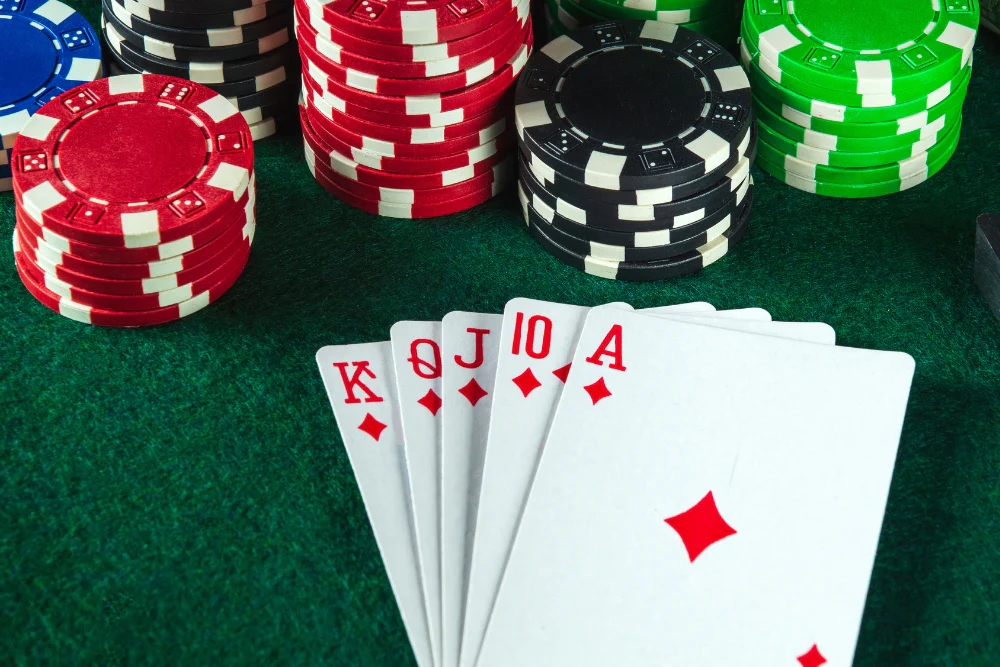
Casino poker games are built around hand rankings, ordered from strongest to weakest as follows: Royal Flush, Straight Flush, Four of a Kind, Full House, Flush, Straight, Three of a Kind, Two Pair, One Pair, and High Card. Whichever variant is on screen, this same hierarchy decides who wins at showdown.
Betting is structured around defined stages rather than open-ended raising. Typically, a player places an ante before seeing any cards, then reviews their hand or any exposed dealer card before deciding whether to raise or fold. Some variants add a further decision point once community cards are revealed. Raise sizes are usually capped as a multiple of the original ante, which keeps the maths predictable from the outset.
Dealer qualification is a rule specific to many casino poker formats. The dealer’s hand often needs to reach a minimum strength — commonly a pair or better — to “qualify” for the raise bet. If it doesn’t qualify, the ante is frequently paid out automatically at even money, regardless of what the raise portion would otherwise have resolved to.
Why Qualification Rules Matter to Your Bottom Line
Ignoring qualification rules is a common beginner oversight. Understanding how often a dealer typically fails to qualify in a given variant directly informs how aggressively a player should raise on marginal hands, since a non-qualifying dealer hand changes the payout structure of that round entirely.
What Poker Is, in Practical Casino Terms
Poker, at its core, is a game of hand comparison decided through betting rather than pure chance alone. Players are dealt hole cards, and in several popular variants, community cards are shared across the table to be combined with those hole cards into the best possible five-card hand.
In a casino setting, this is almost always structured as player versus dealer rather than the multiplayer format associated with poker tournaments. The house applies a fixed mathematical edge built into the rules, meaning the game doesn’t rely on a full table of paying opponents to function — a single player can sit down and play a complete hand against the dealer alone.
| Element | Detail |
|---|---|
| Game Type | Card game, hand comparison |
| Structure | Player versus dealer (casino format) |
| Deck | Standard 52-card deck |
| Formats Available | Live studio and RNG online tables |
Getting Started: A Practical Walkthrough
The sequence below applies broadly across most casino poker variants, with minor differences depending on which one is chosen.
- Decide on your ante wager and confirm the table limits before playing.
- Place the ante to begin the hand.
- Review your hole cards once they’re dealt.
- Weigh your hand against the paytable or any visible dealer card.
- Choose whether to raise, call, or fold.
- Watch community cards reveal in stages, if the variant includes them.
- Finalise any remaining betting decisions.
- Compare hands at showdown and collect winnings where applicable.
Once this rhythm feels natural, hands move fast — especially in RNG formats, where each round resolves in seconds rather than the extended pacing typical of a live studio table.
Poker Variants You’ll Come Across
Poker isn’t one fixed ruleset in a casino environment; it’s a family of related games sharing the same hand rankings but differing in dealing structure and betting rhythm.
Casino Hold’em reshapes Texas Hold’em into a player-versus-dealer format, using shared community cards revealed progressively through the hand.
Three Card Poker simplifies things considerably, built around a fast three-card hand comparison, often paired with a Pair Plus side bet that pays independently of the dealer’s result.
Caribbean Stud Poker deals a full five-card hand to both sides, with the player deciding whether to raise or fold after seeing one exposed dealer card, commonly linked to a progressive jackpot side wager.
Ultimate Texas Hold’em mirrors Casino Hold’em’s structure but permits larger, earlier raises, giving skilled players more room to apply strategic weighting to strong starting hands.
Card Mechanics Behind the Scenes
Every variant runs on a standard 52-card deck, shuffled by a certified random number generator for RNG tables or physically by a trained dealer during live sessions. Hole cards stay hidden to the individual player, while community cards, where used, sit face up for the whole table to see.
Card reveal pacing shapes the entire betting rhythm. Community-card variants typically stage their reveals in a pattern resembling the flop, turn and river structure familiar from traditional Hold’em, condensed into fewer decision points suited to a fast casino format.
Actions a Player Can Take at the Table
A defined set of actions governs every hand of casino poker, and getting familiar with them early makes the shift from demo mode to real-money play far smoother.
- Placing the mandatory ante before cards are dealt
- Calling to match a required bet and stay in the hand
- Raising after assessing hand strength
- Folding to withdraw and limit further loss
- Checking where no additional wager is required to continue
- Adding an optional Pair Plus or side bet before the hand begins
- Placing a blind wager in community-card variants
- Reaching showdown, where hands are compared under standard rankings
Not every variant uses every action listed above. Three Card Poker keeps things simple with a limited action set, while Ultimate Texas Hold’em introduces extra raise points tied to community-card reveals.
| Action | Typical Timing | Effect on the Hand |
|---|---|---|
| Ante | Before cards are dealt | Establishes the base stake for the hand |
| Raise | After hand strength is known | Increases potential payout if the hand wins |
| Fold | When the hand is weak | Ante is lost, further wagering avoided |
| Side Bet | Before the hand begins | Settles independently of the dealer’s result |
| Showdown | End of the hand | Hands compared, winner determined by ranking |
Betting Limits, RTP and House Edge
Ante minimums are generally set low enough for relaxed, casual sessions, while higher-limit tables suit players wagering more substantially per hand. Exact figures vary by variant and can be adjusted by the operator, so it’s worth checking current minimums and maximums directly on the table before playing.
Return to Player figures in casino poker are typically fixed and published by the game provider, reflecting theoretical returns over a large number of hands under correct strategy. Variants such as Casino Hold’em and Three Card Poker commonly land in the mid-to-high 90s, though the exact number depends on the specific studio and ruleset.
House edge sits as the flip side of RTP, representing the built-in advantage retained by the casino. Playing according to a published strategy chart keeps this edge as low as the game allows, while deviating from it — calling with hands that mathematically favour folding — increases the effective edge noticeably. Side bets and progressive jackpots typically carry a higher house edge than the main hand and should be treated as a separate, higher-variance decision.
Live Studio Tables Versus RNG Play
Live poker streams from a professional studio, with a real dealer handling the shuffle, deal and payout in real time. For players drawn to the atmosphere of a physical card room, this format closes much of the gap between online convenience and traditional casino floor play, complete with dealer interaction and visible card handling.
RNG poker, by contrast, uses certified random number generation to resolve rounds within seconds. It’s available continuously rather than tied to a studio schedule, making it a practical choice for players who want a fast, self-paced session at any hour. Fairness in RNG formats is maintained through independent testing and certification of the underlying software.
Playing on Mobile: Android and iPhone
Poker tables are designed to run smoothly across Android and iPhone devices, whether through a dedicated app or straight from a mobile browser. Most variants offer demo access without any registration required, giving new players a genuinely risk-free way to learn the rules before wagering anything.
Betting controls are laid out clearly for touchscreen use, and card visuals remain sharp even on smaller screens. Players moving between desktop and mobile sessions will typically find their settings and history carry across devices once logged into an account.
Demo Mode Compared to Real Money Play
Demo mode provides full access to a variant’s rules and pacing without financial risk, making it genuinely useful for learning hand rankings and betting decisions before committing funds — particularly for less familiar variants such as Ultimate Texas Hold’em.
Real money play introduces a psychological weight demo mode simply can’t replicate. Decisions feel different once actual funds are involved, which is why spending real time in demo mode first is worth building into a routine before switching to a funded account.
Strategy Notes for Newer Players
Strategy in casino poker comes down largely to disciplined hand selection rather than instinct. For formats like Casino Hold’em or Ultimate Texas Hold’em, published optimal strategy charts outline exactly which starting hands justify a raise and which should be folded, based on mathematical expectation.
A frequent beginner mistake is raising or calling out of impatience with borderline hands. Sticking closely to a known strategy chart for the specific variant in play is one of the more reliable ways to keep the house edge as low as the game’s design permits, though no approach guarantees the result of any single hand given the inherent unpredictability of card distribution.
Bankroll Discipline
Setting a fixed session bankroll before sitting down at any poker table is one of the simplest habits separating sustainable play from erratic play. Treating that number as a hard limit, regardless of how the session unfolds, keeps decisions grounded rather than reactive.
Bet sizing relative to that bankroll matters just as much. Wagering a modest share of the total session bankroll per hand allows natural variance to play out without risking the entire balance during a short losing stretch. Reviewing results across multiple sessions, rather than reacting to individual hands, gives a clearer picture of long-term performance.
Where Poker Stands: Strengths and Trade-offs
Poker comes with a distinct set of strengths and trade-offs worth weighing before adopting it as a regular game, particularly compared with simpler casino card games that require fewer decisions per hand.
| What Works in Poker’s Favour | What to Be Mindful Of |
|---|---|
| Strategy directly shapes long-term results | Steeper learning curve than simpler games |
| Several variants suit different playing paces | Side bets often carry a higher house edge |
| Available in both live and RNG formats | Strategy charts take time to learn properly |
| Free demo mode allows genuine practice | Live tables move slower than RNG versions |
Other Card Games Worth Trying
Players who enjoy poker’s strategic pacing often find themselves drawn to other card-based casino games with comparable mechanics. Blackjack shares the appeal of calculated hand values and well-documented optimal strategy, while baccarat offers a faster, more streamlined comparison for players who prefer simpler decisions per round.
Responsible Play Comes First
Poker is best treated as entertainment rather than a dependable source of income. Setting deposit limits, session reminders and loss thresholds before playing helps keep the experience enjoyable and within personal comfort levels. UK players can reach independent support through organisations such as GamCare or the National Gambling Helpline whenever needed.
Spotting early signs of problematic play — chasing losses, extending sessions past a planned budget, or playing longer than intended — becomes far easier once a bankroll and time limit have been agreed in advance. Regular breaks and stepping away when a session isn’t going to plan are simple habits that protect both bankroll and mindset over time.
Frequently Asked Questions
Is poker fair and properly regulated?
Yes, RNG poker tables run on certified random number generators independently tested for fairness, while live poker tables are streamed from licensed studios where a real dealer manages the shuffle and deal under supervised conditions, giving players confidence in every round.
Can I practise poker without risking real money?
Most poker variants include a demo mode accessible directly through the browser without registration, letting new players practise hand rankings and betting decisions thoroughly before ever placing a real-money wager on the tables.
How does live poker differ from RNG poker in practice?
Live poker is streamed from a studio with a human dealer handling the shuffle and deal in real time, offering a slower, more social pace, whereas RNG poker resolves each round within seconds using certified software, suiting players who prefer faster sessions.
Is a download required to play poker on mobile?
No download is required for most poker variants, since they run directly through a mobile browser on both Android and iPhone devices, with demo access available before registration and full functionality once logged into a real-money account.
Will using strategy charts guarantee a win?
No, strategy charts reduce the house edge across a large number of hands but cannot guarantee the outcome of any single hand, since card distribution remains inherently random regardless of how carefully the strategy is followed.